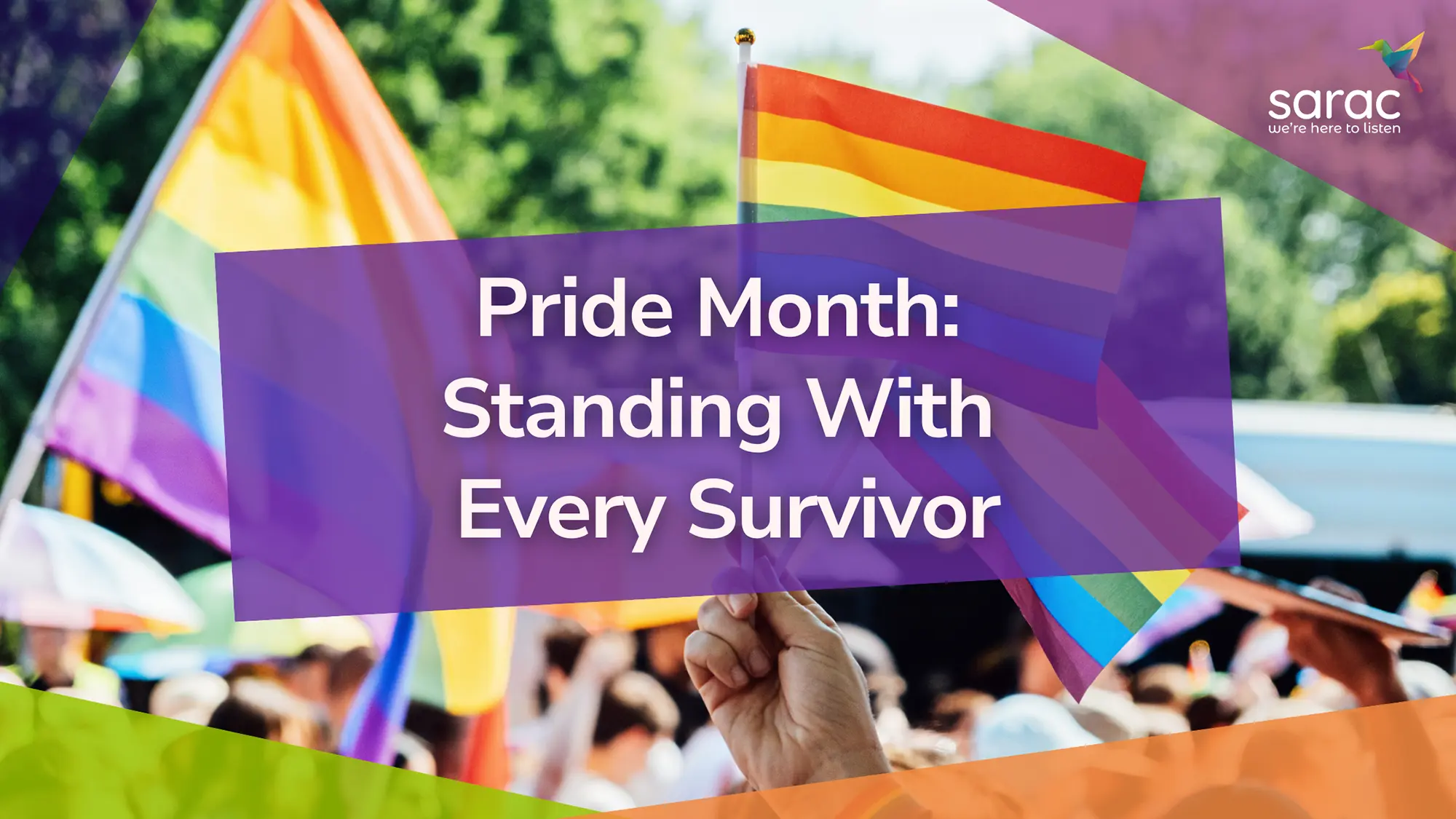
This Pride Month, we want to talk about something that doesn’t always get said loudly enough: sexual violence affects LGBTQ+ people at devastating rates, and too many survivors are still facing that door alone.
The statistics are stark. 17% of LGBTQ+ people have experienced sexual violence, and gay and bisexual men are more than twice as likely to have experienced it compared to men overall. Yet only 14% of gay and bisexual men who experienced sexual assault reported it to the police and of those who did, nearly a third said they were disbelieved or not taken seriously.
Nearly 40% of LGBTQ+ survivors felt they couldn’t tell anyone what had happened to them. The barriers are very real: fear of not being believed, fear of being outed, and fear of discrimination from the very services that should help. Half of LGBTQ+ survivors did not seek support after experiencing sexual violence because they feared discrimination based on their sexuality or gender identity.
Understanding Intersectionality
Coming forward for support is never easy. For many people in the LGBTQ+ community, there are additional layers of complexity that can make seeking help feel even harder.
Intersectionality reminds us that people don’t experience life through one identity alone. Sexual orientation and gender identity intersect with race, disability, religion, socioeconomic status, age and culture, and these overlapping identities can intensify challenges and create unique obstacles to accessing support.
In practice, this might mean someone from a minority ethnic background fears discrimination not only because of their sexuality but also because of their race. It might mean an LGBTQ+ person living with a disability faces both physical barriers to services and social stigma. It might mean someone in a faith community worries about rejection or being misunderstood, or that a young person in a close-knit community fears being outed or not believed.
These pressures can lead to fear of judgement, a lack of culturally competent support, internalised shame and a reluctance to report abuse or ask for help at all.
Why Inclusive Services Save Lives
When a survivor reaches out for help, that moment takes immense courage. If the service they contact doesn’t feel safe, affirming or understanding of their identity, the likelihood is that they won’t reach out again and the consequences of that can be devastating.
Research consistently shows that LGBTQ+ people who access inclusive, identity-affirming support experience better outcomes: they are more likely to engage with services, more
likely to continue their recovery journey and less likely to experience the compounding trauma that comes from being disbelieved or dismissed.
Inclusive services don’t just make people feel welcome. They remove the additional burden that LGBTQ+ survivors carry when they fear that accessing help will expose them to further harm. When someone can walk through the door, or pick up the phone, knowing they will be met with respect and without judgement, that is not a small thing. It can be the difference that changes everything.
At SARAC, we are proud to hold our LGBTQ+ accreditation because inclusion is not a token gesture. It is woven into everything we do, from the way we train our staff to the way we design our services.
A Message From Our Team: Trauma-Informed Care and the LGBTQ+ Community
Caroline Fotheringham, SARAC CEO
“Trauma‑informed care means making sure LGBTQ+ survivors feel safe, respected and believed. It’s about listening without judgement, respecting identity and giving people control over their own choices. At SARAC, it matters because everyone deserves to feel valued and supported when they reach out.”
We’re Here For You
We want every LGBTQ+ survivor in our community to know: you will be believed here. You will be respected here. You do not need to justify your identity to access our support.
There is plenty we can all do: listening without assumptions, creating inclusive and affirming spaces, recognising diverse lived experiences and ensuring services are accessible and visible. Above all, believing people.
Everyone deserves to be heard, supported and safe, without having to navigate additional barriers just to access help.
If you need us, we’re here to listen.
If you or someone you know has been affected by sexual violence, please don’t hesitate to get in touch with SARAC.